Public Institutions of Karnataka, Explained
KUIDFC: Karnataka Urban Infrastructure Development and Finance Corporation Explained
KUIDFC is the Government of Karnataka company that plans, finances and delivers urban infrastructure across the State: drinking water, sewerage, roads, solid waste and city modernisation. This guide by S Jain & Attorneys explains what KUIDFC is, what it has built, how it is run, and how its contracts and disputes work in law.
Please note: this is an independent informational page published by S Jain & Attorneys, a law firm in Bengaluru. It is not the official KUIDFC website and we do not speak for the corporation. For tenders, notifications, RTI and official business, visit the corporation's own website at www.kuidfc.com or contact its registered office in Indiranagar, Bengaluru.
What is KUIDFC?
The Karnataka Urban Infrastructure Development and Finance Corporation Limited, universally shortened to KUIDFC, is a wholly government-owned company registered in November 1993 under the Companies Act, 1956. It sits under the administrative control of the Urban Development Department, Government of Karnataka, and functions as the State's main arm for urban infrastructure projects and as the government's interface with external lenders such as the World Bank and the Asian Development Bank.
Karnataka created KUIDFC because it needed a single professional agency that could assess what its fast-growing cities require, prepare bankable projects, raise money for them, and see them through construction. Roughly one third of Karnataka's population lives in urban areas, and the ordinary municipal bodies (city corporations, municipal councils and town panchayats) rarely have the engineering, financial and procurement capacity to run projects worth hundreds or thousands of crores on their own.
The State has therefore appointed KUIDFC as its nodal agency for urban infrastructure programmes, and the Government of India has recognised it as a State Level Financial Institution. In practice KUIDFC is three things at once: a lender to urban local bodies, a project management organisation, and a trustee-style manager of dedicated infrastructure funds.
KUIDFC Full Form and Quick Facts
| Full form | Karnataka Urban Infrastructure Development and Finance Corporation Limited |
|---|---|
| Established | Registered in November 1993 as a public limited company under the Companies Act, 1956 |
| Ownership | Wholly owned by the Government of Karnataka (CIN U85110KA1993SGC014869) |
| Parent department | Urban Development Department, Government of Karnataka |
| Role | Nodal agency and financial intermediary for urban infrastructure in Karnataka; State Level Financial Institution (SLFI) recognised by the Government of India |
| Headquarters | Nagarabhivruddi Bhavan, No. 22, 17th F Cross, Old Madras Road, Indiranagar 2nd Stage, Bengaluru 560038 |
| Contact | +91 80 2519 6100 | info@kuidfc.com |
Sources: KUIDFC official website (About and Contact pages) and Ministry of Corporate Affairs records.
What Does KUIDFC Do? The Mandate
KUIDFC's objects, as stated by the corporation itself, are to prepare, formulate and implement urban infrastructure projects (land development, sanitation, roads, transport and connected subjects), to provide technical assistance to urban bodies including for master plan implementation, to extend loans and advances to city corporations, municipalities, urban development authorities and other notified bodies, and to offer consultancy that builds the technical and financial capacity of local governments.
As a financial intermediary, it draws funds from the Government of Karnataka, the Government of India, the World Bank, the Asian Development Bank, nationalised banks and the financial markets, and passes them to urban local bodies (ULBs) as loans and grants. Borrowers and grantees include the BBMP, the Bangalore Development Authority, the Bangalore Water Supply and Sewerage Board and dozens of smaller city and town municipal councils.
As a fund manager, KUIDFC runs the Mega City Revolving Fund (built since 2005 out of repayments under the old Mega City Scheme), manages the Karnataka Water and Sanitation Pooled Fund Trust (a Government of Karnataka trust that raises market funds for small and medium towns, and which issued one of India's early pooled municipal bonds in 2005), and operates the Urban Infrastructure Development Fund. It is also the State nodal agency for the Government of India's Pooled Finance Development Facility. Up to February 2022 the Pooled Fund Trust had raised over Rs. 4,000 crore for the State and released more than Rs. 3,380 crore for programmes such as the Chief Minister's Small and Medium Town Development Programme, Nagarothana grants and AMRUT works in 16 ULBs.
As a nodal and implementing agency, it executes externally aided projects and central missions on the State's behalf. That work is the subject of the next section, and it is where most of KUIDFC's public footprint, and most of its contracts and disputes, come from.
Major KUIDFC Programmes and Projects
Over three decades KUIDFC has moved from a Bangalore-focused financing window to the delivery agency for some of India's best-known urban water experiments. The 24x7 continuous water supply projects in Hubballi-Dharwad, Belagavi and Kalaburagi, first piloted under KUWASIP and later scaled city-wide under KUWSMP, are studied nationally because they showed that round-the-clock pressurised water is achievable in Indian cities. The table below summarises the corporation's principal programmes, their funding partners and their focus.
| Programme | Funding partner | Focus |
|---|---|---|
| Mega City Scheme (Bangalore) | Government of India + Government of Karnataka | Centrally sponsored infrastructure scheme for five metros. KUIDFC was the nodal agency for Bangalore; loan repayments now feed the Mega City Revolving Fund, operational since 1 April 2005. |
| KUDCEMP | Asian Development Bank | Karnataka Urban Development and Coastal Environmental Management Project: water supply, sanitation, roads and coastal environment works in 10 coastal towns including Mangaluru, Udupi, Karwar and Sirsi. |
| KMRP | World Bank | Karnataka Municipal Reform Project (approved 2006): municipal computerisation, fund-based accounting in 158 ULBs, property surveys and Greater Bangalore works, with early 24x7 water pilots in Nanjangud, Haliyal and Magadi. |
| KUWASIP | World Bank | Karnataka Urban Water Sector Improvement Project (from 2004): India's pioneering demonstration of 24x7 piped water in zones of Hubballi-Dharwad, Belagavi and Kalaburagi. Non-revenue water in demo zones fell from above 40% to 6-18%. |
| NKUSIP | Asian Development Bank (USD 270 million MFF) | North Karnataka Urban Sector Investment Program (2006 onwards): water, sewerage, drainage and roads across more than two dozen towns, from Hubballi-Dharwad and Belagavi to Bidar, Raichur and Yadgir. |
| JnNURM works | Government of India | State-level nodal role for the Jawaharlal Nehru National Urban Renewal Mission (2005-2014) covering Bangalore and Mysore, implemented through BBMP, BWSSB, BDA, BMTC and other agencies. |
| KIUWMIP (Jalasiri) | Asian Development Bank (MFF approved 28.03.2014) | Karnataka Integrated Urban Water Management Investment Program: Tranche 1 in Davanagere, Harihara, Ranebennur and Byadgi; Tranche 2 (about Rs. 1,000 crore) bringing 24x7 water and sewerage to Mangaluru, Puttur, Udupi and Kundapura. |
| KUWSMP | World Bank (USD 279 million + USD 150 million additional financing) | Karnataka Urban Water Supply Modernization Project (from 2016): scaling the 24x7 pilots to full city coverage in Hubballi-Dharwad, Belagavi and Kalaburagi through city water utilities and professional operators. |
| Smart Cities Mission | Government of India + Government of Karnataka | KUIDFC is the State Level Nodal Agency for Karnataka's seven smart cities: Belagavi, Davanagere, Hubballi-Dharwad, Mangaluru, Shivamogga, Tumakuru and Bengaluru, each implemented through a city SPV. |
| HRIDAY (Badami) | Government of India (100% central funding) | Heritage City Development and Augmentation Yojana works at Badami (about Rs. 22.6 crore), with KUIDFC nominated as the State nodal agency by G.O. dated 18.02.2016. |
| 9-Towns water supply | Government of Karnataka | Water supply implementation in nine smaller ULBs, from Mundargi and Kampli to K.R. Pet and Mulki, with the Managing Director of KUIDFC as Project Director. |
| Solid waste management (Bengaluru) | Government of Karnataka | Municipal solid waste processing plants at six locations around Bengaluru with a combined capacity of about 2,300 tonnes per day, plus engineered landfill facilities. |
Programme details are drawn from KUIDFC's own project pages and from World Bank and Asian Development Bank project records. The Karnataka Municipal Reform Project era also ran alongside the State's Nirmala Nagara municipal reform drive, which brought self-assessment of property tax and computerised accounting to Karnataka's towns.
How is KUIDFC Governed?
KUIDFC is governed by a Board of Directors drawn from the senior ranks of the Karnataka government. The board typically includes nominee directors from the Urban Development Department, the Finance Department and the Housing Department, together with the heads of allied agencies such as the Directorate of Municipal Administration, the Bangalore Water Supply and Sewerage Board, the Karnataka Urban Water Supply and Drainage Board and the Bangalore Metropolitan Region Development Authority. Directors are appointed by the Government of Karnataka.
Day-to-day management vests in the Managing Director, an IAS officer who serves as the chief executive under the superintendence and control of the Board, assisted by professional staff and officers drawn from State cadres. For major programmes, decision-making is supported by Empowered Committees of secretaries chaired at the Additional Chief Secretary level, and the Smart Cities work is steered by a State High Powered Steering Committee under the Chief Secretary. The corporation's registered office is at Nagarabhivruddi Bhavan on Old Madras Road, Indiranagar, Bengaluru.
KUIDFC and Legal Disputes: Arbitration, Contracts and the 2024 Karnataka Arbitration Withdrawal
A body that tenders, funds and supervises thousands of crores of works contracts inevitably generates legal work: contractor claims for delay and price escalation, terminations, defect liability disputes, consultancy disagreements, recovery proceedings against ULBs, and writ petitions around tenders. How those disputes are resolved has changed twice in the last decade, and the change matters to every contractor and urban local body dealing with KUIDFC.
The 2014 mandate. By Circular No. LAW 273 LAC 2012(p) dated 10.01.2014, the Law, Justice and Human Rights Department of the Government of Karnataka directed that an arbitration clause be incorporated in all government contracts and tenders, referring disputes to arbitration under the Arbitration Centre - Karnataka (Domestic and International) Rules, 2012. The Centre itself had been established at Khanija Bhavan, Bengaluru under G.O. No. LAW 273 LAC 2012 dated 06.12.2012. Departure from arbitration needed the approval of both the Chief Minister and the Law Minister.
KUIDFC adopts it, 2019. KUIDFC gave the policy teeth in its own house: by a circular dated 10.05.2019 it directed that the arbitration agreement be incorporated in all KUIDFC and ULB contracts and consultancy agreements. The Karnataka High Court has treated this chain as so binding that in Abhiram Infra Projects v. City Corporation, Davanagere (CMP No. 256/2020, decided 09.08.2023) it read an arbitration agreement into a municipal works contract that contained no written clause at all, on the strength of the 2014 circular and the 2019 KUIDFC circular. KUIDFC has also invoked arbitration itself, seeking appointment of an arbitrator under Section 11 of the Arbitration and Conciliation Act in its software dispute with a vendor (KUIDFC v. Data Semantics, Karnataka High Court, 16.11.2023). On the projects side, KUIDFC's own status reports record NKUSIP spill-over water supply packages and a KUWSMP contract in Hubballi passing through arbitration.
The 2024 withdrawal. By Circular No. LAW-LAC/198/2024 dated 16.11.2024, the Government of Karnataka withdrew the 10.01.2014 circular with immediate effect, invoking Section 21 of the General Clauses Act, 1897. The result: arbitration clauses are no longer mandatory in Karnataka government contracts, and departments drafting new tenders will ordinarily route disputes to the civil and commercial courts instead.
What this means in practice. Three positions now coexist. First, contracts signed while the mandate stood usually contain concluded arbitration agreements, and a concluded arbitration agreement under Section 7 of the Arbitration and Conciliation Act, 1996 survives the withdrawal of the circular that prompted it; those disputes still go to arbitration. Second, contracts signed after 16.11.2024 without an arbitration clause will be fought in court, which for high-value works claims means commercial suits and, frequently, High Court litigation. Third, there is a genuinely open question: KUIDFC's own 10.05.2019 circular has not been withdrawn, so whether contracts signed under it after the State-level withdrawal still attract arbitration is an issue awaiting an authoritative ruling. Until that is settled, the dispute clause in each KUIDFC-linked contract deserves careful, date-specific reading. Our guide to alternative dispute resolution explains how arbitration under the 1996 Act works in Karnataka.
Our Empanelment with KUIDFC
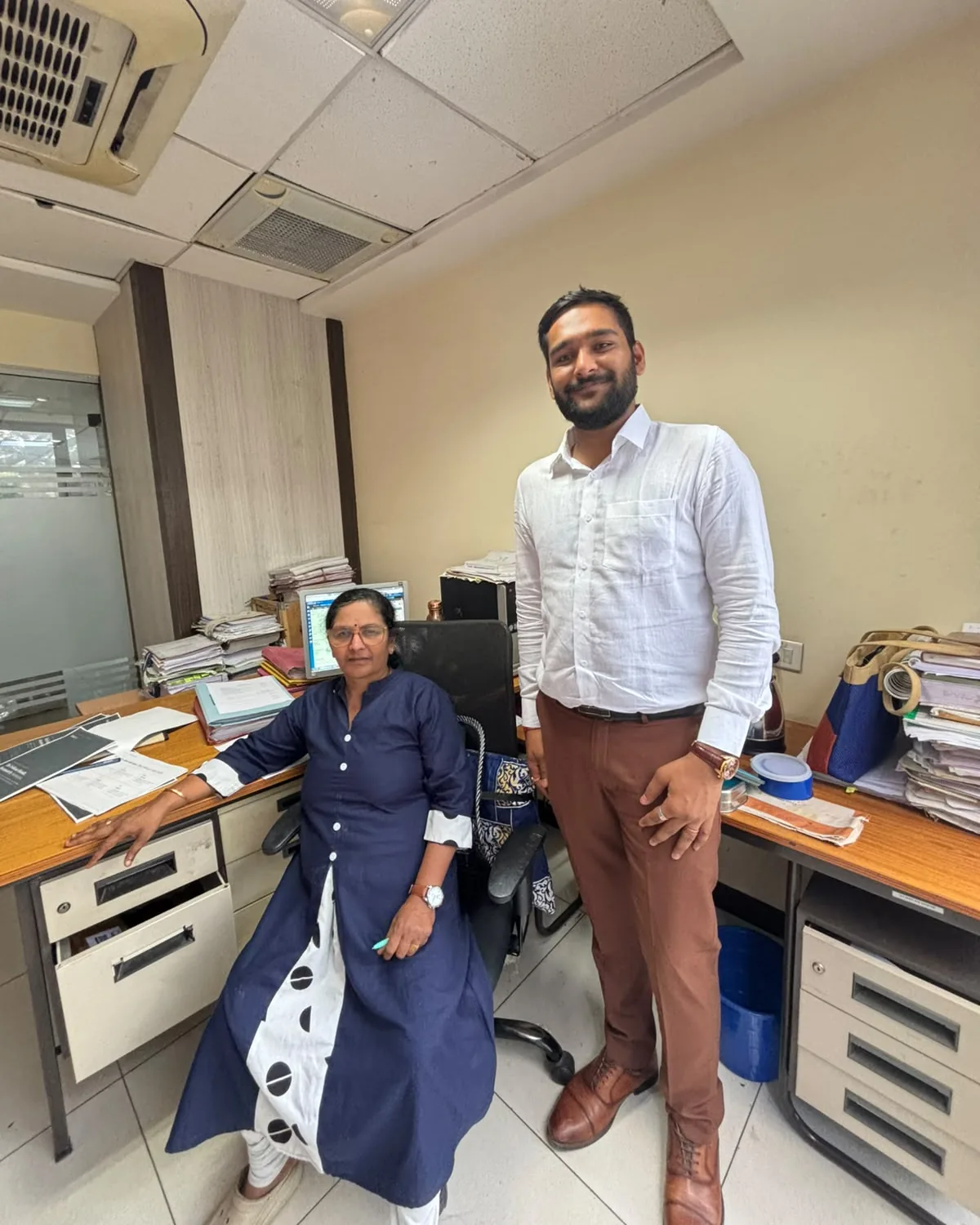
Advocate Sharan Jain of S Jain & Attorneys, Bengaluru, is an empanelled panel advocate of KUIDFC. Government corporations maintain panels of independent advocates to handle their legal work, and empanelment follows the corporation's own selection process.
Panel counsel for a body like KUIDFC typically render legal opinions on contracts, tenders and policy circulars, draft and vet agreements and notices, appear in arbitrations arising out of works and consultancy contracts, and represent the corporation before courts and tribunals, including the Karnataka High Court. The role calls for familiarity with government contracting, the Karnataka Transparency in Public Procurements Act, the Arbitration and Conciliation Act, 1996 and the circular chain described above.

How Contractors and Citizens Interact with KUIDFC Legally
Contractors and consultants. Bids for KUIDFC-linked works are invited through the State e-procurement system under the Karnataka Transparency in Public Procurements Act, 1999, and the corporation's active tenders are listed on its website. Before signing, read the dispute resolution clause with the 2024 withdrawal in mind: a contract signed in 2018 and a contract signed in 2025 may send the very same claim to two different forums. Keep contemporaneous records of delays, variations and payments; whether a claim ends up before an arbitral tribunal or a commercial court, the paper trail decides it. Contract structuring questions of this kind sit within corporate and commercial law practice.
Urban local bodies and agencies. ULBs borrow from and implement through KUIDFC under tripartite arrangements with the State. Their officers deal with loan covenants, fund-release conditions, project agreements with operators, and occasionally disputes with contractors that the Abhiram Infra line of cases can pull into arbitration even where the contract is silent. Legal review of these documents before signature is far cheaper than litigating them afterwards.
Citizens. Residents do not usually contract with KUIDFC directly; their water connection, tax bill or grievance lies with the local ULB or water board. But KUIDFC is a public authority for the purposes of the Right to Information Act, 2005, so project documents, sanction orders and progress reports can be sought under RTI. Consumers of public utilities in Karnataka also have sector-specific remedies; our explainer on electricity consumer rights before the KERC shows how such state-level regulatory remedies work.
For corrections or queries about anything on this page, you can write to the firm. For official KUIDFC business, always use the corporation's own contact points listed above.
KUIDFC: Frequently Asked Questions
What is the full form of KUIDFC?+−
KUIDFC stands for Karnataka Urban Infrastructure Development and Finance Corporation Limited. It is a Government of Karnataka company that finances and implements urban infrastructure projects across the State.
Is KUIDFC a government company?+−
Yes. KUIDFC was registered in November 1993 as a public limited company under the Companies Act, 1956. It is wholly owned by the Government of Karnataka and works under the administrative control of the Urban Development Department.
What does KUIDFC actually do?+−
KUIDFC prepares, finances and implements urban infrastructure projects such as water supply, sewerage, roads and solid waste management. It lends to urban local bodies, manages funds like the Mega City Revolving Fund and the Karnataka Water and Sanitation Pooled Fund, and acts as the State nodal agency for externally aided projects and Government of India urban programmes.
Which major projects has KUIDFC implemented?+−
Its portfolio includes the Mega City Scheme for Bangalore, KUDCEMP in coastal Karnataka, NKUSIP in North Karnataka, the KUWASIP and KUWSMP 24x7 water supply projects in Hubballi-Dharwad, Belagavi and Kalaburagi, KIUWMIP (Jalasiri), the Karnataka Municipal Reform Project, JnNURM works and the Smart Cities Mission in Karnataka.
Who heads KUIDFC?+−
A Board of Directors made up of senior Government of Karnataka officials governs KUIDFC. The Managing Director, an IAS officer, is the chief executive and runs the corporation under the superintendence of the Board.
How can I contact KUIDFC?+−
The registered office is at Nagarabhivruddi Bhavan, No. 22, 17th F Cross, Old Madras Road, Indiranagar 2nd Stage, Bengaluru 560038. Phone: +91 80 2519 6100. Email: info@kuidfc.com. The official website is www.kuidfc.com.
Is KUIDFC the same as BBMP or BWSSB?+−
No. BBMP is the municipal corporation of Bengaluru and BWSSB supplies water within Bengaluru. KUIDFC is a State-level financing and project management company that funds and supports such agencies and urban local bodies across Karnataka.
What is a KUIDFC panel advocate?+−
A panel advocate is a lawyer empanelled by the corporation to handle its legal work, such as legal opinions, contract vetting, arbitrations and court appearances. Advocate Sharan Jain of S Jain & Attorneys, Bengaluru, is empanelled with KUIDFC.
Does KUIDFC arbitrate disputes with contractors?+−
Many contracts from the 2014 to 2024 period contain arbitration clauses, because a Government of Karnataka circular dated 10.01.2014 made arbitration compulsory in government contracts and KUIDFC adopted it by its circular dated 10.05.2019. Those signed arbitration agreements continue to bind the parties, so disputes under such contracts commonly go to arbitration.
What changed for Karnataka government contract arbitration in 2024?+−
By Circular No. LAW-LAC/198/2024 dated 16.11.2024, the Government of Karnataka withdrew its 2014 circular that mandated arbitration clauses in government contracts, with immediate effect. Existing arbitration agreements survive, but new government contracts are no longer required to provide for arbitration, so future disputes will more often be fought in the courts.
Key Sources
- KUIDFC official website: www.kuidfc.com (About, Projects, Fund Management and Contact pages).
- World Bank, Karnataka Urban Water Supply Modernization Project: project brief.
- Asian Development Bank, North Karnataka Urban Sector Investment Program: project record; Karnataka Integrated Urban Water Management Investment Program: project record.
- Government of Karnataka, Circular No. LAW 273 LAC 2012(p) dated 10.01.2014 and Circular No. LAW-LAC/198/2024 dated 16.11.2024 (withdrawal of the arbitration clause mandate).
- Abhiram Infra Projects v. City Corporation, Davanagere, Karnataka High Court, CMP No. 256/2020, decided 09.08.2023.
Last reviewed in July 2026. This page is educational material, not legal advice, and is not affiliated with or endorsed by KUIDFC or the Government of Karnataka.